- Sách/Book
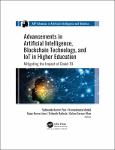
Authors: Subhendu Kumar Pani (2023) - This new volume focuses on the application of artificial intelligence, blockchain technology, and the Internet of Things to meet the new challenges faced by higher education due to the Covid-19 pandemic, which necessitated restrictions to gathered groups of students and others and increased the need for alternative means of teaching, learning, and communication. With a need to find alternatives to the traditional face-to-face teaching and learning during the pandemic, the authors of Advancements in Artificial Intelligence, Blockchain Technology and IoT in Higher Education: Mitigating the Impact of Covid-19 discuss the best use of technologies in many areas of study in higher education. The book addresses the growing role of AI in the digital transformation in higher education system...
|
- Sách/Book
Authors: Shashank Awasthi (2023) - The book aims to provide a deeper understanding of the synergistic impact of Artificial intelligence (AI) and the Internet of Things (IoT) for disease detection. It presents a collection of topics designed to explain methods to detect different diseases in humans and plants. Chapters are edited by experts in IT and machine learning, and are structured to make the volume accessible to a wide range of readers.
|
- Sách/Book
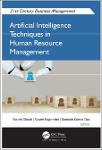
Authors: Arvind K. Birdie (2023) - This new volume presents a range of techniques aimed to enhance the operation of human resource management by applying state-of-the-art artificial intelligence technology. With illustrative case studies, the volume uses as examples from several types of problems and includes their possible solutions using advanced AI technology. The volume explores the confluence of smart computing and traditional businesses to foster productivity, profitability, and prosperity and goes on to apply AI techniques in the recruitment process, with enterprise resource planning (ERP) management software, for manpower optimization systems in colleges, for creating uniformity in HRM across organizations, for creating conflicting strategy management techniques, and more. One pandemic-related chapter discuss...
|
- Sách/Book
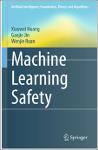
Authors: Xiaowei Huang (2023) - The book aims to improve readers’ awareness of the potential safety issues regarding machine learning models. In addition, it includes up-to-date techniques for dealing with these issues, equipping readers with not only technical knowledge but also hands-on practical skills.
|
- Sách/Book
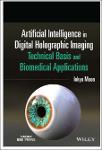
Authors: Inkyu Moon (2023) - Artificial Intelligence in Digital Holographic Imaging introduces key concepts and algorithms of AI to show how to build intelligent holographic imaging systems drawing on techniques from artificial neural networks, convolutional neural networks, and generative adversarial network. Readers will be able to gain an understanding of the basics for implementing AI in holographic imaging system designs and connecting practical biomedical questions that arise from the use of digital holography with various AI algorithms in intelligence models.
|
- Sách/Book
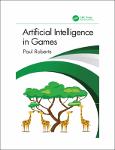
Authors: Paul Roberts (2023) - This book covers all the necessary topics that a professional game AI programmer needs to know, from math and steering behaviours to terrain analysis, pathfinding, decision making, and more. Written to be easily accessible, each topic is accompanied by an example game, where the reader can add their own code to see the effects their changes have. This book will be suitable for students and aspiring games programmers looking to gain a grounding in game AI techniques
|
- Sách/Book
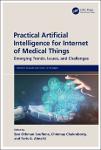
Authors: Ben Othman Soufiene (2023) - This book covers the fundamentals, applications, algorithms, protocols, emerging trends, problems, and research findings in the field of AI and IoT in smart healthcare. It includes case studies, implementation and management of smart healthcare systems using AI. Chapters focus on AI applications in Internet of Healthcare Things, provide working examples on how different types of healthcare data can be used to develop models and predict diseases using machine learning and AI, with the real-world examples. This book is aimed at Researchers and graduate students in Computer Engineering, Artificial Intelligence and Machine Learning, Biomedical Engineering, and Bioinformatics. Features: Focus on the Internet of Healthcare Things and innovative solutions developed for use in the applicati...
|
- Sách/Book
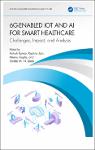
Authors: Ashish Kumar (2023) - In today's era, there is a need for a system that can automate the process of treatment for the patient if medical facilities are out of reach. Smart healthcare can step in to make the patient more self-dependent. 6G with its features can be taken as the future of smart healthcare with IoT and AI. 6G-enabled IoT and AI for Smart Healthcare: Challenges, Impact, and Analysis offers the fundamentals, history, reality, and challenges faced in the smart healthcare industry today. It discusses the concepts, tools, and techniques of smart healthcare as well as the analysis used. The book details the role that Machine Learning-based Deep Learning and 6G-enabled IoT concepts play in the automation of smart healthcare systems. The book goes on to presents applications of smart healthcare thro...
|
- Sách/Book
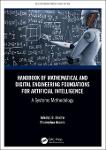
Authors: Adedeji B. Badiru (2023) - This book provides a guide for using digital engineering platforms for advancing AI applications. The book discusses an interface of education and research in the pursuit of AI developments and highlights the facilitation of advanced education through AI and digital engineering systems. It presents an integration of soft and hard skills in developing and using AI and offers a rigorous systems approach to understanding and using AI
|
- Sách/Book
Authors: Pijush Dutta (2023) - This book is written in a clear and thorough way to cover both the traditional and modern uses of Artificial Intelligence and soft computing. It gives an in-depth look at mathematical models, algorithms, and real-world problems that are hard to solve in MATLAB. The book is intended to provide a broad and in-depth understanding of fuzzy logic controllers, genetic algorithms, neural networks, and hybrid techniques such as ANFIS and the GA-ANN model
|