- Sách/Book
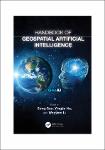
Authors: Song Gao (2024) - This comprehensive handbook covers Geospatial Artificial intelligence (GeoAI) which is the integration of geospatial studies and AI using deep learning and knowledge graph technologies. It explains fundamental concepts, methods, models, and technologies of GeoAI, and discusses the recent advances, research tools, and applications that range from environmental observation and social sensing to natural disaster responses. As the first single volume on this fast-emerging domain, it is an excellent resource for educators, students, researchers, and practitioners utilizing GeoAI
|
- Sách/Book
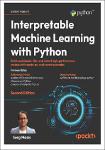
Authors: Christoph Molnar (2022) - This book is about making machine learning models and their decisions interpretable. After exploring the concepts of interpretability, you will learn about simple, interpretable models such as decision trees, decision rules and linear regression. The focus of the book is on model-agnostic methods for interpreting black box models such as feature importance and accumulated local effects, and explaining individual predictions with Shapley values and LIME.
|
- Sách/Book
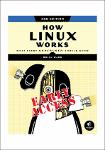
Authors: Brian Ward (2020) - In this third edition of the bestselling How Linux Works, author Brian Ward peels back the layers of this well-loved operating system to make Linux internals accessible. This edition has been thoroughly updated and expanded with added coverage of Logical Volume Manager (LVM), virtualization, and containers.
You’ll also explore the kernel and examine key system tasks inside user-space processes, including system calls, input and output, and filesystem maintenance. With its combination of background, theory, real-world examples, and thorough explanations, How Linux Works, 3rd Edition will teach you what you need to know to take control of your operating system.
|
- Sách/Book
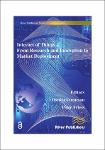
Authors: Ovidiu Vermesan; Peter Friess (2014) - The book aims to provide a broad overview of various topics of Internet of Things from the research, innovation and development priorities to enabling technologies, nanoelectronics, cyber physical systems, architecture, interoperability and industrial applications
|
- Sách/Book
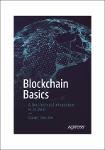
Authors: Daniel Drescher (2017) - In 25 concise steps, you will learn the basics of blockchain technology. No mathematical formulas, program code, or computer science jargon are used. No previous knowledge in computer science, mathematics, programming, or cryptography is required. Terminolog is explained through pictures, analogies, and metaphors. This book bridges the gap that exits between purely technical books about the blockchain and purely business-focused books. It does so by explaining both the technical concepts that make up the blockchain and their role in business-relevant applications.
|
- Sách/Book
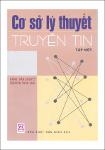
Authors: Đặng Văn Chuyết (2003) - Khái niệm chung về lý thuyết truyền tin. Xác suất và quá trình ngẫu nhiên, thông tin và lượng tin, mã hiệu, mã hoá nguồn, tín hiệu và hệ thống truyền tin, cấu trúc tối ưu cho kênh có nhiễu cộng Gaussian, phương pháp đồng bộ vật mang và kí hiệu ở đầu thu
|
- Sách/Book
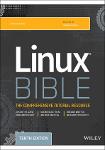
Authors: Christopher Negus (2020) - Linux Bible, 10th Edition is the ultimate hands-on Linux user guide, whether you're a true beginner or a more advanced user navigating recent changes. this updated tenth edition covers the latest versions of Red Hat Enterprise Linux (RHEL 8), Fedora 30, and Ubuntu 18.04 LTS. It includes information on cloud computing, with new guidance on containerization, Ansible automation, and Kubernetes and OpenShift. With a focus on RHEL 8, this new edition teaches techniques for managing storage, users, and security, while emphasizing simplified administrative techniques with Cockpit. Written by a Red Hat expert, this book provides the clear explanations and step-by-step instructions that demystify Linux and bring the new features seamlessly into your workflow.
|
- Sách/Book
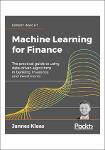
Authors: Jannes Klaas (2019) - The book is based on Jannes Klaas' experience of running machine learning training courses for financial professionals. Rather than providing ready-made financial algorithms, the book focuses on the advanced ML concepts and ideas that can be applied in a wide variety of ways.The book shows how machine learning works on structured data, text, images, and time series. It includes coverage of generative adversarial learning, reinforcement learning, debugging, and launching machine learning products. It discusses how to fight bias in machine learning and ends with an exploration of Bayesian inference and probabilistic programming.
|
- Sách/Book
Authors: Anais Sutherland (2024) - "C++ Programming Cookbook" goes beyond being a mere collection of recipes; it serves as a manifesto for progressive software development practices and problem-solving. Readers are empowered to adapt and apply their learnings to new, unexplored situations because each recipe not only solves specific problems but also exposes fundamental ideas and methodologies. Writing code that is clean, efficient, and easy to maintain is a priority throughout the book, which aims to help readers develop a skill set that is applicable to more general programming problems.
|
- Sách/Book
Authors: たてばやし淳 (2023) - この書籍では、ChatGPTとDALL·E 3の最強タッグを活用して、ビジネスの現場で役立つ画像を効率的に生成するノウハウをお伝えします。テクノロジーの進化を最大限に活用して、あなたのビジネスをさらに魅力的にしましょう。第1章 ビジネスのための画像生成 入門
|