Search

Search Results

Results 391-400 of 800 (Search time: 0.069 seconds).
Item hits:
  • Sách/Book


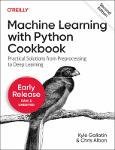
  • Authors: Gallatin, Kyle (2023)

  • This practical guide provides more than 200 self-contained recipes to help you solve Machine Learning challenges you may encounter in your work. If you're comfortable with Python and its libraries, including pandas and scikit-learn, you'll be able to address specific problems all the way from loading data to training models and leveraging neural networks

  • Sách/Book


  • Authors: Stauffer, Matt (2023)

  • The third edition of this practical guide provides the definitive introduction to one of today's most popular web frameworks.

  • Sách/Book


  • Authors: Kane, Sean (2023)

  • This edition includes significant updates to the examples and explanations that reflect the substantial changes that have occurred since Docker was first released almost a decade ago. Sean Kane and Karl Matthias have updated the text to reflect best practices and to provide additional coverage of new features like BuildKit, multi-architecture image support, rootless containers

  • Sách/Book


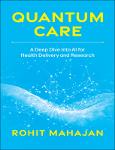
  • Authors: Mahajan, Rohit (2023)

  • In this book, you will take a deep dive into the remarkable strides that AI is making, with chapters covering: The current and future implementation of AI in healthcare and medicine.The impact of AI in drug discovery with examplesincluding how AI helped bring the COVID-19 vaccines to market. Answers to ethical and privacy concerns about healthcare AI. Best practice guides for practitioners and administrators. A roadmap for startups and investors in healthcare AI

  • Sách/Book


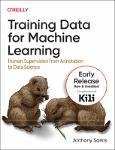
  • Authors: Sarkis, Anthony (2023)

  • Training Data controls the system by defining the ground truth goals for the creation of Machine Learning models. This involves technical representations, people decisions, processes, tooling, system design, and a variety of new concepts specific to Training Data. In a sense, a Training Data mindset is a paradigm upon which a growing list of theories, research and standards are emerging. A Machine Learning (ML) Model that is created as the end result of a ML Training Process.

  • Sách/Book


  • Authors: Lanier, Lee (2015)

  • In Compositing Visual Effects in After Effects, industry veteran Lee Lanier covers all the common After Effects techniques any serious visual effects artist needs to know, combining the latest, professionally-vetted studio practices and workflows with multi-chapter projects and hands-on lessons.

  • Sách/Book


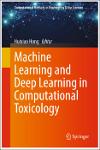
  • Authors: Huixiao Hong (2023)

  • This book is expected to provide a reference for practical applications of machine learning and deep learning in toxicological research. It is a useful guide for toxicologists, chemists, drug discovery and development researchers, regulatory scientists, government reviewers, and graduate students.

  • Sách/Book


  • Authors: Fei Hu; Iftikhar Rasheed (2023)

  • Deep Learning (DL) will be an effective approach for AI-based vehicular networks and can deliver a powerful set of tools for such vehicular network dynamics. In various domains of vehicular networks, DL can be used for learning-based channel estimation, traffic flow prediction, vehicle trajectory prediction, location-prediction-based scheduling and routing, intelligent network congestion control mechanism, smart load balancing and vertical handoff control, intelligent network security strategies, virtual smart & efficient resource allocation and intelligent distributed resource allocation methods. This book is based on the work from world-famous experts on the application of DL for vehicle networks. It consists of the following five parts: (1) DL for vehicle safety and security: In ...

  • Sách/Book


  • Authors: Roshani Raut (2023)

  • This book explores how to use generative adversarial networks in a variety of applications and emphasises their substantial advancements over traditional generative models. This book's major goal is to concentrate on cutting-edge research in deep learning and generative adversarial networks, which includes creating new tools and methods for processing text, images, and audio. A generative adversarial network (GAN) is a class of machine learning framework and is the next emerging network in deep learning applications. Generative Adversarial Networks(GANs) have the feasibility to build improved models, as they can generate the sample data as per application requirements. There are various applications of GAN in science and technology, including computer vision, security, multimedia an...