Search

Search Results

Results 591-600 of 1718 (Search time: 0.213 seconds).
Item hits:
  • Book


  • Authors: Laimutis Valeika (2010)

  • Pragmatics, or, to be more exact, linguistic pragmatics, is a branch of linguistics concerned with the use of language in the situation. Many a work has been written on general and specifc problems of pragmatics since the time of C. W. Morris, the father of modern pragmatics. Te same can be said about textbooks: they seem to be in abundance. However, the textbooks available are, as a rule, designed for students whose frst language is English; no attention is paid to those whose frst language is not English. In this textbook, where relevant, an attempt is made to contrast the linguistic means of realization of the speaker’s meaning in English and Lithuanian. Such an approach, though relatively sporadic, is two-way useful: it enhances the understanding of the problems being examined ...

  • Book


  • Authors: Scarino , Angela (2009)

  • The authors wish to acknowledge the contributions of those who participated in the project to produce this Guide and the supporting online materials. Development of Teaching and Learning Languages: A Guide was funded by the Department of Education, Employment and Workplace Relations under the Australian Government’s School Languages Program (SLP). It supports some of the actions recommended in the National Statement for Languages Education in Australian Schools and the National Plan for Languages Education in Australian Schools 2005–2008 developed through the Ministerial Council on Education, Employment, Training and Youth Affairs (MCEETYA) relating to the strengthening and promoting of quality teaching and learning practices and supporting the provision of high quality, ongoing an...

  • Book


  • Authors: Trujillo, Fernando (2019)

  • Materials and resources have been divided into three sections: the old, the new and the newest. The first one includes the most traditional elements in a language classroom: the blackboard, the textbook, visual aids and hand-made materials. The second comprises the over-head projector, the audio player and the video camera and video player. Finally, the latter section deals with the information and communication technologies which represent the brand-new present and the future of our profession. In general, the objective of this chapter is to prove that teachers have a wide range of materials and resources available to them. Some of them may look more “teachercentred” and some other may be more suitable for a “learner-centred” environment. However, the challenge, in every case, i...

  • Book


  • Authors: Gorman , Mary (2019)

  • It forms part of a series of self-study booklets, in which teachers will find useful theory and practice for teaching English effectively, including short case studies and professional development activities to do individually and with colleagues.

  • Book


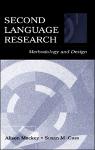
  • Authors: Alison Mackey (2005)

  • Throughout the book, examples from applied linguistics, second language acquisition, and TESOL are provided. Helpful discussion and data-based skill-building exercises at the end of each chapter promote better understanding of the principles discussed. A glossary outlines the key terms in second language research. Second Language Research: Methodology and Design is an ideal textbook for introductory and advanced classes in second language research methods, as well as classes in related areas, for example, TESOL research methods.

  • Book


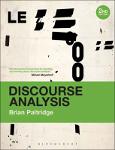
  • Authors: Paltridge , Brian (2012)

  • This is the new edition of Discourse Analysis: An Introduction, an accessible and widely-used introduction to the analysis of discourse. In its 10 chapters the book examines different approaches to discourse, looking at discourse and society, discourse and pragmatics, discourse and genre, discourse and conversation, discourse grammar, corpus-based approaches to discourse and critical discourse analysis

  • Book


  • Authors: Srihari, Sriganesh (2017)

  • The problem of protein complex prediction may be just one of the plethora of computational problems that have opened up since the deluge of proteomics (protein-protein interaction; PPI) data over the last several years. However, in reality this problem encompasses or directly relates to several important and open problems in the area—in particular, the fundamental problems of modeling, visualizing, and denoising of PPI networks, prediction of PPIs (novel as well as evolutionarily conserved), and protein function prediction from PPI data. Therefore, to write a comprehensive self-contained book, we had to cover even these closely relatedproblemstosomeextentoratleastalludetoorreferencetheminthebook. We had to do so without missing the connection between these problems and our central p...